CES has always been more than a technology conference. It is a global barometer of where innovation is headed and whose priorities are shaping the future. Each year, what happens on its stages and show floors tells us which problems the industry is serious about solving and which voices it values enough to elevate. In an era defined by artificial intelligence, that question has never mattered more.
CES 2026 brought together approximately 148,000 attendees from more than 160 countries, with over 4,100 exhibitors and thousands of senior-level decision makers converging in Las Vegas. AI dominated the conversation — from enterprise systems and infrastructure to healthcare and human-centered design. Yet even as AI accelerates at unprecedented speed, women remain dramatically underrepresented in the rooms where its architecture, ethics, and deployment strategies are decided.
That gap is consequential as I have often stated, ‘AI is the most feminine technology humanity has ever created. We must have more women in the room and their voices not only heard but revered.’
AI Infrastructure, Optimization, and the Cost of Excess
I took the CES stage to host a panel focused on a topic many organizations are confronting too late: the hidden cost of over-architecting AI. The panel examined CPU optimization, enterprise AI workloads, and the rapidly growing demand for data centers — issues that sit at the intersection of performance, economics, sustainability, and ethics.
I was joined by leaders who live at that intersection every day: John Hampton, Corporate Vice President of Global Enterprise Technical Sales at AMD; Chad Smykay, Field CTO and Distinguished Technologist at Hewlett Packard Enterprise; and Niv Sundaram, former Intel executive and now Chief Strategy and Technology Officer at Machani Robotics.
The message that emerged was consistent and clear. The industry’s reflex to throw more compute at every problem is not only inefficient, it is unsustainable. Enterprises are discovering that complexity does not equal capability. In fact, poorly aligned AI architectures often create operational drag, ballooning costs, and systems that fail to deliver meaningful outcomes.
The MIT Reality Check on Enterprise AI ROI
A recent study from MIT’s Project NANDA, highlighted in MIT Sloan Management Review and industry analyses, found that approximately 95% of enterprise AI and generative AI initiatives fail to deliver measurable positive return on investment. Despite tens of billions of dollars being spent on AI tools, platforms, and infrastructure, only a small fraction of deployments translate into sustained business value.
Although some would point to this as a technology failure, it is a leadership and design failure.
AI systems are being deployed without sufficient attention to integration, context, governance, and critically — ethical oversight. Optimization, not maximalism, is what drives ROI. Responsible AI is not slower AI; it is more disciplined, more human-centered, and ultimately more effective.
Infrastructure Is an Ethical Decision
The infrastructure conversation at CES underscored another uncomfortable truth: AI is forcing us to confront physical limits. Compute capacity, power availability, cooling requirements, and data center expansion are no longer abstract concerns. They are shaping global energy demand and corporate capital allocation.
As Dr. Lisa Su, Chair and CEO of AMD, stated in her CES keynote, “AI is the most important technology of the last 50 years… and most importantly, AI is for everyone.”
In the same keynote, she issued a sobering reminder: “We don’t have nearly enough compute for all the things we want to do with AI.”
That statement should reframe how leaders think about AI strategy. Every infrastructure choice — from CPU optimization to data center location — is also a decision about access, sustainability, and long-term impact. Ethical AI does not begin with policy statements. It begins with architectural intent.
From Infrastructure to Impact: The Data Gap in Women’s Health
Following the panel, I delivered a keynote on a different but deeply connected issue: data disparities in women’s health. AI is increasingly being positioned as a solution for predictive diagnostics, personalized medicine, and preventative care. Yet women remain systematically underrepresented in the datasets used to train these models.
Women’s biology is still treated as an edge case.
Clinical trials, longitudinal health data, and algorithmic training sets have historically centered male physiology. Hormonal variability, reproductive life stages, menopause, and sex-specific symptom presentation introduce complexity that many models are simply not designed to handle. The result is AI that performs unevenly, and sometimes dangerously, for women.
When AI systems fail women in healthcare, the consequences are not theoretical. They are measured in delayed diagnoses, mischaracterized risk, and diminished quality of care. Building predictive models without representative data does not just limit accuracy — it encodes inequity at scale.
Storytelling as a Catalyst for Change
To bring that reality into sharper focus, we played the official trailer for The M Factor 2.0 – Before The Pause. The film continues the work of elevating menopause and women’s health from whispered conversations to mainstream discourse.
Technology alone does not change systems. Stories do.
By combining scientific insight with lived experience, narrative becomes a lever for policy, investment, and research prioritization. CES is exactly the kind of platform where those stories belong as a core part of the innovation agenda.
Starting the Day With Unstoppable Women
I began Tuesday morning with the invitation-only Unstoppable Women of Web3 and AI Breakfast, a powerful convening that underscored why representation at CES must happen early, visibly, and at the highest levels. As technology agendas are being set and strategic conversations begin, who is in the room matters.
The breakfast, hosted in partnership with Modev’s AI House, brought together senior women leaders from across AI, Web3, and emerging technologies. It was intentionally designed not as a side event, but as a leadership moment — a space where influence, expertise, and vision converged before the CES show floor even opened.
As Sandy Carter, Senior Vice President and Channel Chief at Unstoppable Domains and Founder of Unstoppable Women of AI and Web3, so aptly captured:
“CES is where the future shows up early. This Modev AI House breakfast honored 50 senior women leaders, including 11 of our Most Inspirational Women of AI and Web3 from a global community of 145. It was about more than recognition. It was about making leadership visible at the moment when technology directions are being set.”
When women lead early conversations at CES, they shape the trajectory of innovation before narratives harden and decisions become irreversible. Moments like this breakfast remind us that leadership is not only about who builds the technology, but who is present when its purpose and direction are defined.
Visibility Still Matters: Women Walk the Floor
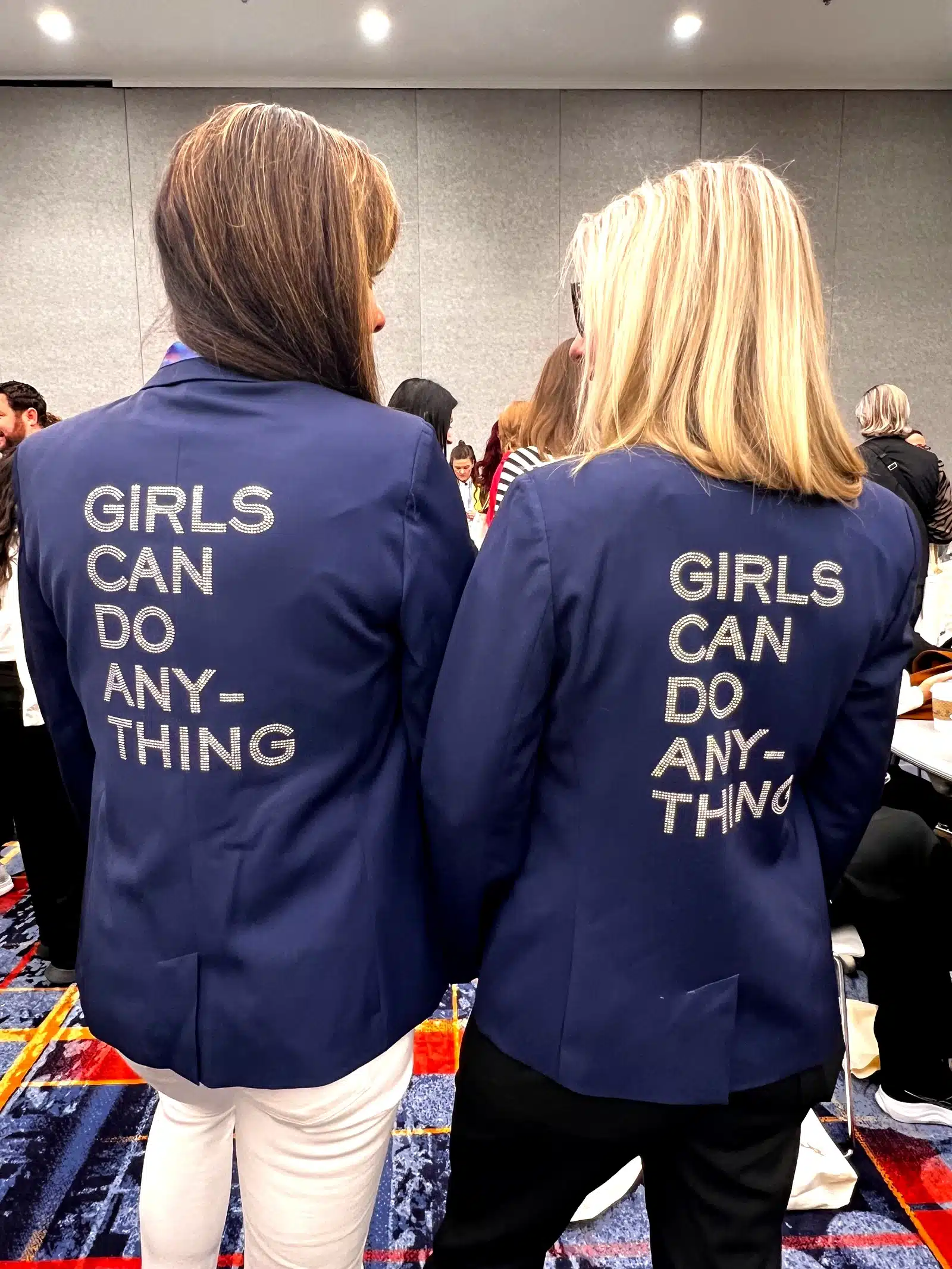
I also participated in the Female Quotient’s annual Women Walk the Floor, an event that is both symbolic and strategic. CES remains a place where partnerships are forged, capital is allocated, and futures are negotiated in real time. Visibility in those spaces changes who is invited into the next conversation.
Women walking together at CES is a statement of solidarity. During the walk, I had the privilege of being interviewed by the BBC with a focus on why there are not more women in technology. The answer is complex and involves more than hiring bias. As a woman who was often the only female in the room, I can attest that not all environments have felt overly welcome. We have a tremendous amount of work to do to create a safe space where women feel welcome, heard, and respected. Unity at events such as CES is a wonderful way to start.
Women Leading at the Highest Levels
Dr. Lisa Su’s presence at CES is a reminder of what leadership at scale looks like. Her framing of AI as universal, infrastructure-dependent, and transformative reflects the kind of long-term thinking the industry needs more of. It also matters that this vision is coming from a woman leading one of the world’s most influential semiconductor companies.
Representation at the top changes expectations and outcomes.
The Numbers Behind the Gap
Despite the centrality of AI to our future, women make up only about 22% of the global AI workforce, according to multiple studies, including research summarized by the World Economic Forum and Interface.
That imbalance is even more pronounced in senior technical and leadership roles. The consequence is not just inequity; it is incomplete systems. AI reflects the assumptions, priorities, and blind spots of the people who build it. Homogeneous teams produce narrow outcomes. Diverse teams build more resilient, inclusive, and commercially viable technology.
Why Women Matter in Technology — Especially Now
AI is no longer a future concern. It is actively shaping healthcare decisions, enterprise systems, infrastructure investment, and human opportunity. If women are absent from its design, women’s needs will be absent from its impact.
Ethical AI is not an abstract ideal. It is a practice. It requires representation, accountability, and the willingness to ask uncomfortable questions early — before systems are scaled beyond correction.
CES 2026 made one thing clear: the future of AI is still being written. The question is whether we will design it deliberately — or inherit it by default.
Women at CES are not asking for inclusion as an afterthought. We are asserting our role as architects of what comes next. And the future of technology will be better for it.