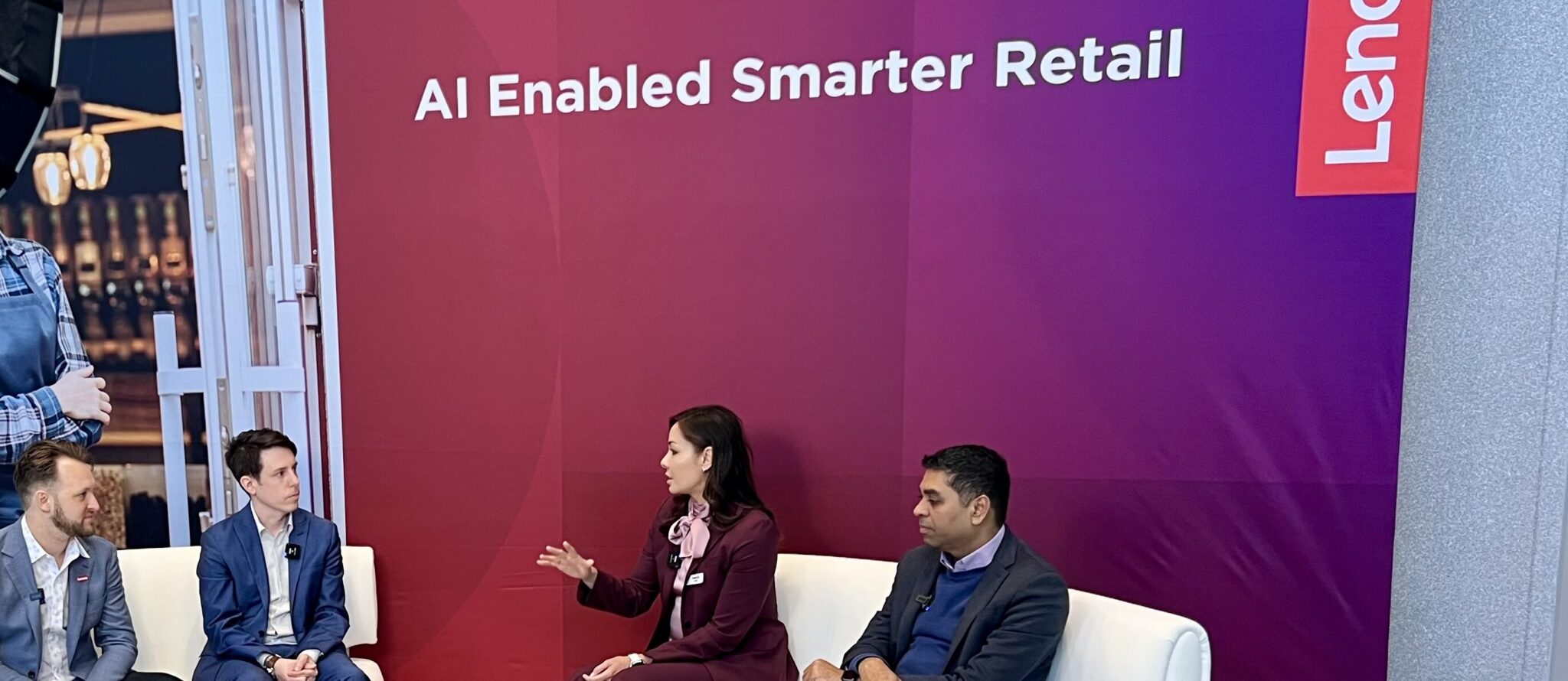
Some announcements you read twice, just to be sure they are real. On September 15, 2026, the National Sporting Goods Association announced that I will serve as its AI Expert in Residence. I am deeply grateful, and I am honored in a way that is hard to put into words. I am going to try anyway, because the people who made this possible deserve to hear it, and because the questions NSGA members are asking about AI are the same questions every retailer in America is asking right now, beginning with how to optimize a small business for AI search.
So this is part thank you and part field guide: what AI really means for retail, both online and on Main Street, and what a store owner can do this month so that a small business is ready to optimize for AI search.
Why this one is personal

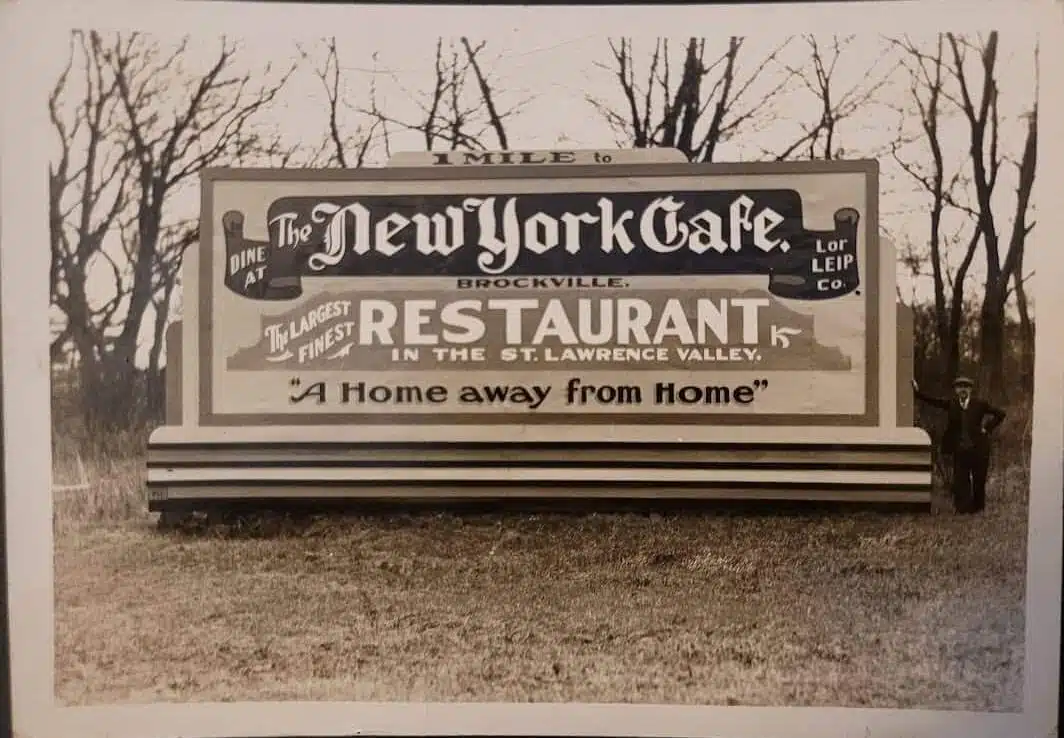
I grew up above my family’s restaurant, The New York Restaurant in Brockville, Ontario. My bedroom was right outside the glowing red lantern that hung over the street. My day started at 5:00 a.m., eating breakfast and exploring the dark, empty kitchen. After school I came home to fold napkins, make egg rolls, roll change, seat people at their tables, wash dishes, and even help families select the perfect lobster from our lobster tank. We were open seven days a week.
I also watched my father carry what every owner carries. He lamented theft, supply chain problems, staffing challenges, inventory, spoilage, and the endless work of running the place more efficiently. And through all of it, serving the public always took priority. The guest in front of you never waits on the problem behind you.
From sporting goods to the keynote stage
In high school I worked in sporting goods stores, selling skis, running shoes, and workout wear to people who walked in unsure and walked out ready. Later I owned a health club, and after that I worked for what was at the time the largest health club chain in the world. Long before I cofounded a computer vision company and deployed AI across real retail stores, and long before I ever stood on a stage to talk about artificial intelligence, I was a kid in a family business learning that a good store does far more than move product. It sends people back into their lives a little braver.
In short, brick and mortar retail is in my blood. So when I stood in front of NSGA members at the 2026 Leadership Conference in Nashville, I was not speaking to an industry. I was speaking to my people.
They were generous beyond measure. The session earned a 4.84 out of 5 from attendees, and NSGA President and CEO Matt Carlson kindly said it landed because it showed how to use AI in a way that “anyone from a novice to an expert can understand.” That sentence means more to me than any rating. Making AI understandable, useful, and human is the whole reason I do this work.
What the collaboration includes
NSGA has been the voice of the sporting goods industry since 1929. Over the coming year I will be creating webinars and downloadable resources exclusively for its members. The first webinar, AI in Action: What Has Changed, What Matters Now and What to Do Next, took place on September 17. More sessions are planned for October 2026, January 2027, and March 2027, with resources housed on the NSGA website and featured in its newsletters and in NSGA NOW magazine.
Then, in May 2027, I will return for a workshop and a speaker session at the NSGA Leadership Conference at The Wigwam in Litchfield Park, here in Arizona. I already cannot wait.
I have deployed AI on the retail floor
Between the family restaurant and the keynote stage there was a third chapter, and it is the one that makes me impatient with vague AI advice. As cofounder and co CEO of a leading computer vision company, I led a large scale deployment of AI inside brick and mortar retail. Not a pilot in a lab. Instead, cameras and models running in real stores, in real time, watching shelves, queues, and checkouts while customers shopped.
That work taught me things no report can. AI in a store lives or dies on the basics: clean data, honest measurement, and staff who understand what the system is for and trust that it is on their side. The most valuable output was rarely the flashy prediction. Instead, it was the small, daily truth about what was out of stock, where the line was too long, and where shrink was quietly happening, delivered early enough for a person to act on it. Those are the same problems my father wrestled with at the restaurant. I got to help solve them at scale, and now I get to help store owners solve them with tools that cost almost nothing.
What AI means for online retail right now
The shift is no longer theoretical. Adobe’s analysis of more than one trillion visits to U.S. retail sites found that traffic arriving from AI sources grew 393 percent year over year in the first quarter of 2026. More telling is what those visitors do once they arrive. In March 2025, shoppers referred by AI converted 38 percent worse than everyone else. One year later they converted 42 percent better. In the same research, 39 percent of consumers said they had already used AI to shop online.
In other words, a growing share of your customers now ask ChatGPT, Claude, Gemini, or Perplexity what to buy and who to buy it from before they ever see your website. By the time they reach you, the decision is mostly made.
Here is the uncomfortable part. Adobe also tested how readable retail sites are to AI systems. The average product page scored 66 out of 100. The very pages that describe what you sell are the ones AI struggles most to understand. If an AI assistant cannot read your product page, it cannot recommend your product. That, more than anything, is why a small business needs to optimize for AI search now.
What AI means for brick and mortar
Every few years someone declares the physical store finished. The numbers keep disagreeing. Ecommerce accounted for 17.1 percent of total U.S. retail sales in the second quarter of 2026, according to U.S. Census Bureau figures. That means more than eighty cents of every retail dollar is still not spent online.
I say this as someone who has stood on both sides of the counter, as a kid in a family business and as the co CEO who put AI into stores at scale. What has changed is the front door. It used to be your window display. Then it was your Google listing. Now it is increasingly an AI answer to a question like “where can I get my daughter fitted for softball cleats near me this weekend.” The store that gets named in that answer wins the visit. The store that does not get named never knew the customer existed.
Four places AI shows up for a local store
For a local retailer, AI shows up in four practical places:
Being found. Accurate hours, services, brands carried, and real customer reviews, stated consistently everywhere your business appears, are what AI systems draw on when they recommend a local store. This is also the simplest way a small business can optimize for AI search, because it costs nothing but attention.
Buying back time. Product descriptions, social posts, the weekly email, the staff schedule, the first draft of a vendor reply. These are hours an owner can hand to an AI assistant and spend on the sales floor instead.
Seeing your own business clearly. Your sales data already knows which glove sells with which bat and which month your running customers come back. AI can read that history in minutes and tell you what to stock, bundle, and promote.
Easing the worries my father carried. Theft, spoilage, inventory, staffing, and suppliers were the problems I watched him wrestle with year after year. Today an owner can ask AI to flag unusual patterns in sales and refunds, forecast what will sell next week so less is wasted, draft a staff schedule around expected traffic, and compare supplier pricing in minutes. None of it replaces an owner’s judgment. Rather, it gives that judgment better information, and it gives the owner more time for the guest in front of them.
The line between online and in store is disappearing
The most useful research I know on this comes from ICSC. Its Halo Effect III study of 69 retailers found that opening a physical store lifts online sales in the surrounding area by an average of 6.9 percent, and that closing one is followed by an 11.5 percent drop. Stores and websites do not compete with each other. On the contrary, they feed each other.
AI tightens that loop even further. For example, a parent asks an assistant for the best youth baseball glove, reads the answer, checks which nearby store has it, and walks in on Saturday. One purchase, three channels, and the customer experienced it as a single conversation. Retailers who think in terms of online versus in store are organizing around a line their customers no longer see.
AI will not replace trusted retailers. But it will amplify them.
Five ways to optimize a small business for AI search this month
1. Ask AI about yourself
Open ChatGPT or Claude and ask it to recommend a store in your category and your town. Then notice who gets named, and what it says about you. My free 5 Minute AI Visibility Test walks you through this.
2. Make your facts consistent
Your name, address, hours, services, and brands should match on your website, your Google Business Profile, and your social channels. Inconsistency is the most common reason AI passes over a good business.
3. Rewrite your ten best sellers for a human and a machine
Say plainly what the product is, who it is for, and what problem it solves. Clear writing serves the customer in front of you and the AI reading over their shoulder.
4. Ask AI to audit your Google Business Profile
Your Google Business Profile is often the first thing an AI assistant reads about a local store. Paste in what it currently says and let AI find the gaps.
Copy and paste prompt
5. Write one answer page for your most asked question
Every store has a question it answers ten times a week. “Do you fit running shoes?” “Can you restring a racquet while I wait?” A single page that answers it fully, in your own words, is exactly what AI assistants look for when they decide who to recommend.
Copy and paste prompt
If you want the full walk through on how to optimize a small business for AI search, I wrote 8 Steps to Turning Searchers Into Customers in Your Retail Business With AI with store owners in mind.
The part technology cannot do
As an AI ethicist, I will keep repeating this for as long as anyone will listen: the technology works best when people stay accountable for how it is used and for the outcomes it creates. AI can draft the email, but it cannot care whether the twelve year old in front of you makes the team. AI can forecast demand, yet it cannot remember that a customer’s husband passed away last spring and ask how she is doing.
The retailers who will thrive are the ones who let AI carry the repetitive work so their people can do more of the human work. That is not a consolation prize, because in a world where anyone can generate a product description, being known, trusted, and kind is the advantage that cannot be copied.
Thank you
To Matt Carlson and the entire NSGA team: thank you for your trust and your warmth. To every member who stayed after the session in Nashville to ask one more question: you are the reason this collaboration exists. You reminded me where I came from, and you gave me the chance to serve an industry that shaped me long before I knew what a neural network was.
I do not take it lightly, and I will work to be worthy of it.
See what AI says about your business
Take the free 5 Minute AI Visibility Test and find out whether AI assistants can find, understand, and recommend you.
Frequently asked questions
Who is the AI Expert in Residence for the National Sporting Goods Association?
Susan Sly. NSGA announced the collaboration on September 15, 2026. Susan is a female AI keynote speaker, AI ethicist, and two time AI founder who, as cofounder and co CEO of a leading computer vision company, led a large scale deployment of computer vision AI in brick and mortar retail. She creates webinars and resources on practical AI for NSGA members and will present at the NSGA 2027 Leadership Conference.
How is AI changing online retail?
Shoppers increasingly ask AI assistants what to buy before visiting a retailer’s site. Adobe reported that AI referred traffic to U.S. retail sites grew 393 percent year over year in the first quarter of 2026, and that by March 2026 those visitors converted 42 percent better than other traffic. Retailers whose product pages are easy for AI to read are more likely to be recommended.
How is AI changing brick and mortar retail?
AI is becoming the new front door for local stores. Shoppers ask assistants where to buy nearby, so accurate and consistent business information determines which stores get named. Inside the business, AI saves owners time on marketing and administration and helps them read their own sales data to stock and bundle more wisely.
How do you optimize a small business for AI search?
Start by asking ChatGPT, Claude, Gemini, or Perplexity to recommend a business like yours in your town and read what it says. Then make your name, hours, services, and brands identical everywhere they appear, rewrite your best selling product pages in plain language, and publish one page that fully answers the question customers ask most. Consistent, clear, and complete information is what AI assistants rely on when they decide which small business to name.
Will AI replace physical stores?
The evidence says no. More than eighty percent of U.S. retail sales still happen offline, and ICSC research shows that physical stores lift online sales in the areas around them. AI amplifies trusted retailers. It does not replace the human relationships that make a store worth visiting.
Susan Sly is a female AI keynote speaker, AI ethicist, and two time AI founder, named by CTO Magazine among the Top 7 female AI thought leaders in the world and serving as AI Expert in Residence for the National Sporting Goods Association. If your association or company is bringing retailers together and wants a practical, hopeful session on AI, you can invite Susan to speak.